+420 596 614 750

Case study

Krnov – PV 218 kWp – BESS 416 kWh

A project for meat processing, where photovoltaics and storage protect continuous refrigeration and reduce costs at the same time.

Anonymised reference · Krnov · expanded after two years of operation

From brief to result

How we approached the project

Challenge

The refrigeration and freezing equipment of the meat processing plant runs continuously, and its consumption rises further in summer. The project was to reduce costs and help with demand peaks while preserving every metre of production space.
Solution

A 218 kWp PV plant was built with a ballasted mounting system and a separate technology container. The first battery phase had 216 kWh; after two years of operation, it was expanded by a further 200 kWh in 2025.

Result

The total BESS capacity reached 416 kWh. The expansion after the first operating phase shows a practical way to scale storage according to the actual load and the customer's experience.

At a glance

What the project means in practice

Food refrigeration runs continuously and needs the most energy on warm days, when photovoltaics also generate well. After the experience with the first battery, the customer expanded the capacity because the system had proved its benefit in real operation.

Technical overview

Photovoltaics
218 kWp, AEG 455 Wp panels
Storage – phase 1
216 kWh
Storage – expansion
+200 kWh in 2025, 416 kWh in total
Mounting structure
Novotegra ballasted system without penetrating the roof membrane

Technical data

Diagrams that help explain the solution

The examples are based on design documentation for typical solutions. They explain the principle of the solution; specific documentation is always prepared according to the building, the operation and the grid connection conditions.

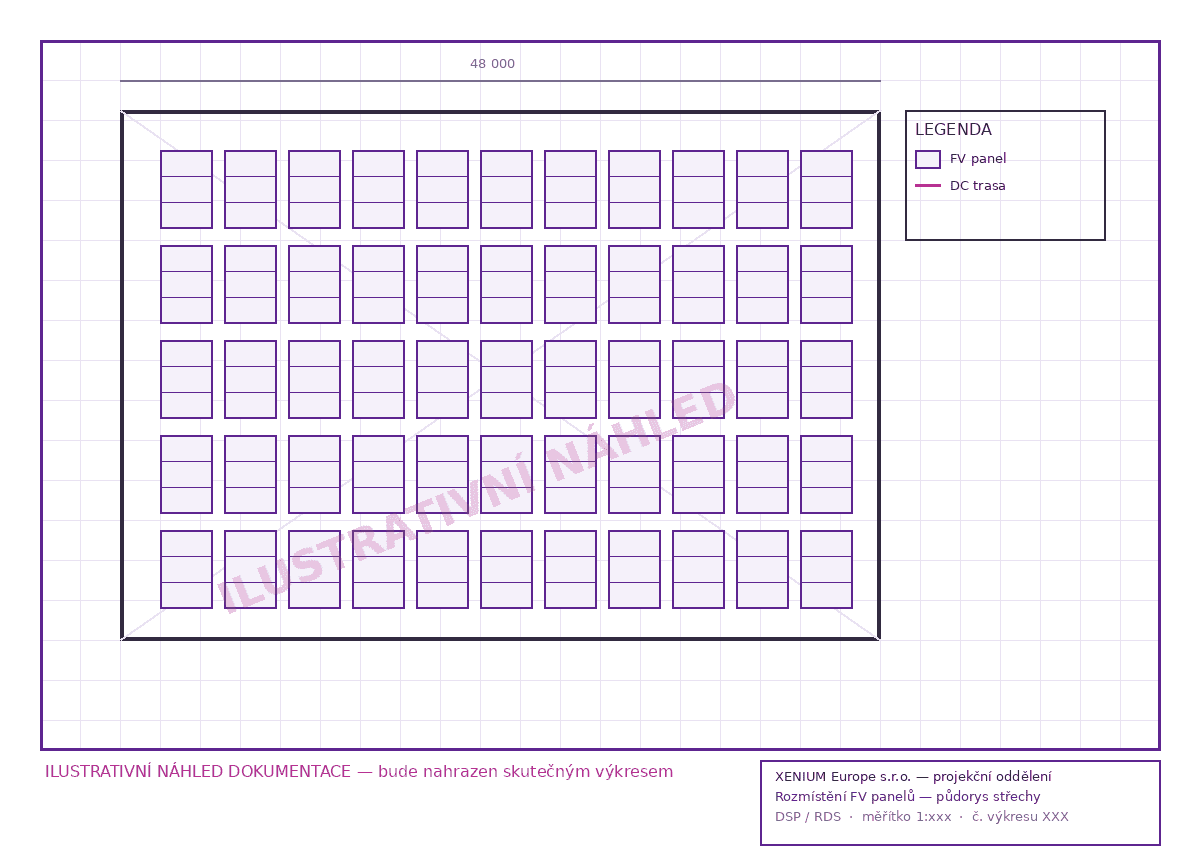
Illustrative plan of the PV panel layout and DC routes on the roof

How to read a rooftop PV drawing

Illustrative design diagram: on the drawing, the designer verifies the usable area, spacing, service corridors and the routing of DC cables. This is not the actual drawing of this specific project.

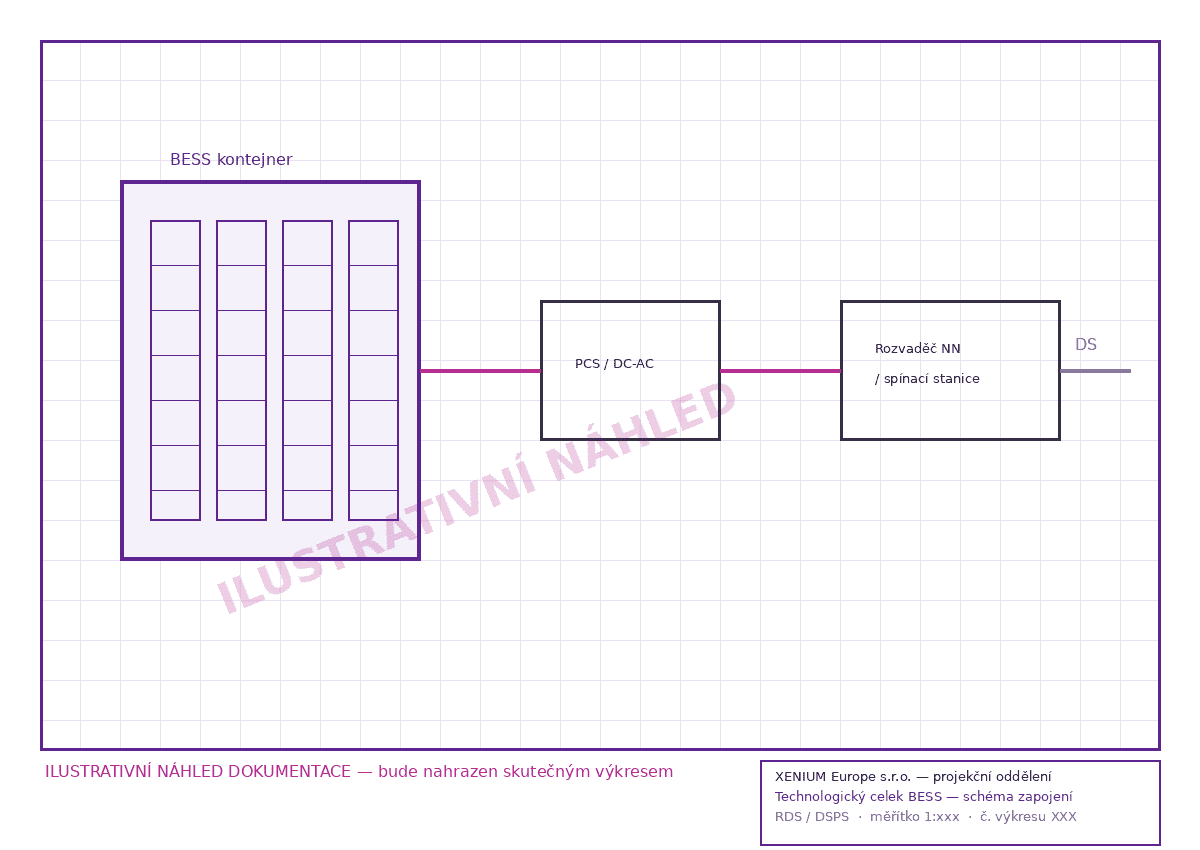
Illustrative block diagram of a BESS battery storage connection

How the BESS is connected to the energy system

Illustrative design diagram: the battery container is connected to the distribution board and the distribution grid via the PCS power unit. The actual connection is always designed according to the power, operation and grid connection conditions.

Project story

The context behind the result

01 · Food production

Consumption that knows no weekends

Refrigeration, freezing, processing and hygiene create stable demand throughout the week. Photovoltaic generation rises precisely when refrigeration works hardest.

The ballasted rooftop solution required no penetration of the roof membrane, and the battery and inverter technology was housed in a separate container outside the production area.

02 · Phased development

A battery that was expanded after two years

The first 216 kWh storage system stored energy for later consumption and helped manage demand peaks. Operating experience then led to the second phase.

A further 200 kWh increased the total capacity to 416 kWh. The project clearly shows that a properly prepared system can grow with the needs of the operation.

What matters about the project

Main benefits and technical conclusions of the project

scaling the battery according to actual operation

a suitable reference for energy-intensive food production

linking generation, refrigeration and savings

218 kWp PV and batteries expanded to 416 kWh

Anonymised case study of a completed XENIUM project.

Related references

More projects from the same segment

Frýdek-Místek – PV 249 kWp – LED lighting and lightning protection

A layered energy project for a manufacturing site, where photovoltaics, new lightning protection and gradual replacement of lighting followed one another.

View the case study

Three sites – PV 2 MWp – BESS 1,080 kWh

Long-built trust of a large retail chain, proven at three sites and extended with battery storage in a modified shipping container.

View the case study

Czech Republic – PV 192 kWp – BESS 226 kWh

An energy system for an operation where a power outage must not stop cooling and endanger the vacuum hardening equipment.

View the case study

From a reference to your project

A similar result starts with an analysis of the specific operation