Challenge
An energy-intensive food production site needed to reduce consumption gradually, without splitting responsibility between several suppliers. At the same time, each new phase had to link safely to the technology already in operation.
Case study
A layered energy project for a manufacturing site, where photovoltaics, new lightning protection and gradual replacement of lighting followed one another.
Anonymised reference · Frýdek-Místek · 2019–2023
From brief to result
Challenge
An energy-intensive food production site needed to reduce consumption gradually, without splitting responsibility between several suppliers. At the same time, each new phase had to link safely to the technology already in operation.
Solution
The foundation in 2019 was a 249 kWp rooftop PV plant. In 2020–2021 it was followed by an upgrade of the lightning protection and, between 2020 and 2023, by a gradual replacement of lighting in individual parts of the site.
Result
The result is an integrated whole in which photovoltaics generate the site's own energy, LED lighting reduces its consumption and the new air-termination system protects the investment on the roof. One partner holds together the delivery, monitoring and aftercare.
At a glance
The company did not start with one huge intervention. First it began generating its own electricity, then it upgraded the roof's lightning protection and finally reduced lighting consumption step by step. Each investment therefore makes sense on its own while supporting the others.
Technical overview
Technical data
The examples are based on design documentation for typical solutions. They explain the principle of the solution; specific documentation is always prepared according to the building, the operation and the grid connection conditions.
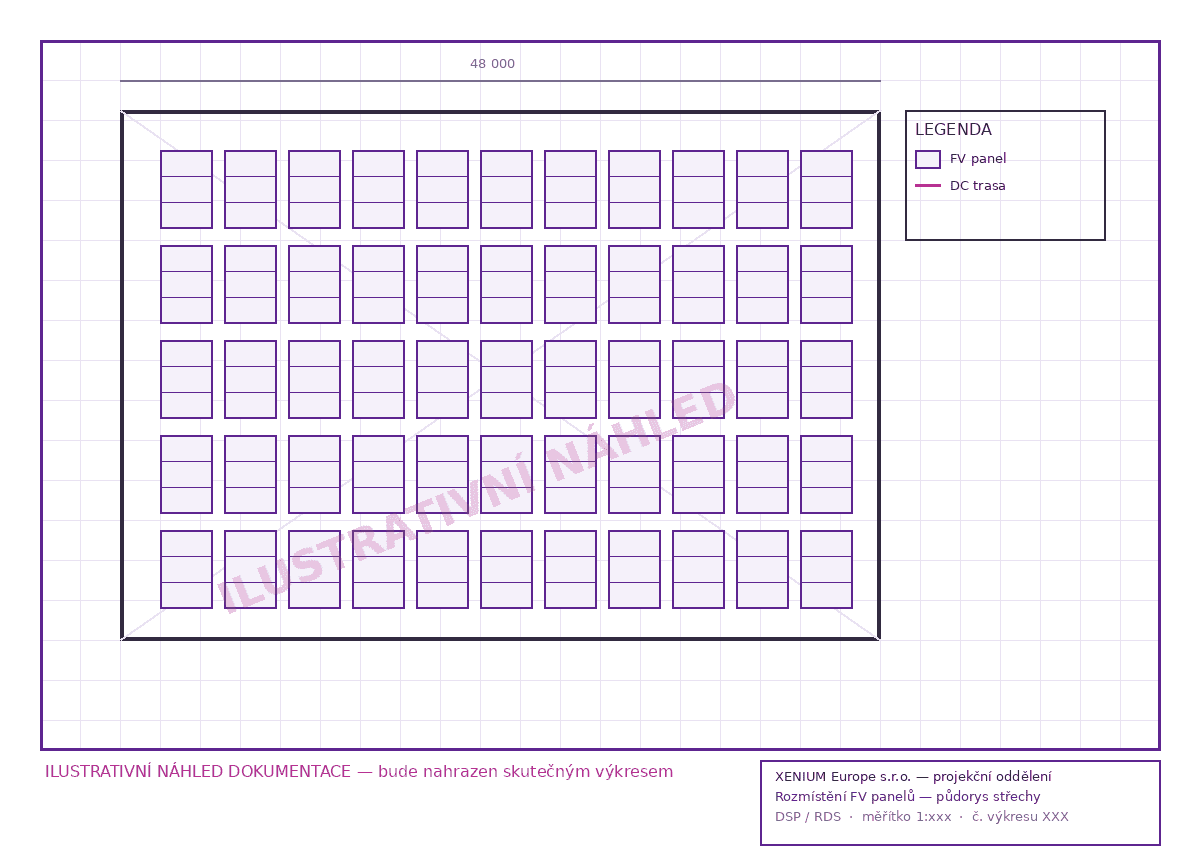
Illustrative design diagram: on the drawing, the designer verifies the usable area, spacing, service corridors and the routing of DC cables. This is not the actual drawing of this specific project.
Project story
01 · Gradual upgrade
The project did not start by trying to change the whole site at once. The first phase brought on-site electricity generation, the next addressed roof safety after the panels were installed, and the third gradually reduced lighting consumption in the production and storage areas.
The individual steps support each other: more efficient lighting leaves more generated energy for the production equipment, and the upgraded lightning protection reflects the new situation on the roof.
02 · Operation and care
The photovoltaic plant is remotely monitored and its operation is part of long-term care. Each phase was integrated into the existing site so that further development does not have to start from scratch.
The reference shows that an energy upgrade can be split into manageable investment steps while keeping one technical concept and one point of responsibility.
What matters about the project
one brand for energy generation, building safety and lighting
follow-on investments without losing control of the project
a reference example of long-term cooperation with an industrial client
Anonymised case study of a completed XENIUM project.
Related references
Long-built trust of a large retail chain, proven at three sites and extended with battery storage in a modified shipping container.
View the case studyAn energy system for an operation where a power outage must not stop cooling and endanger the vacuum hardening equipment.
View the case studyA project for meat processing, where photovoltaics and storage protect continuous refrigeration and reduce costs at the same time.
View the case studyFrom a reference to your project
We combine PV, BESS, VESU+ and supporting infrastructure into one design.
Go to productsWe professionally compare options from the documents you provide before recommending the output and investment.
How the professional assessment worksBasic information about your consumption and project goal is enough. We will propose a meaningful next step.
Arrange a consultation